Fifteenth Amendment
News of the WorldThe Fifteenth Amendment is the constitutional guarantee that the novel identifies with voting rights for qualified men regardless of race, color, or previous condition of servitude. Read aloud amid Reconstruction-era Texas’s political tensions, it becomes both a statement of formal legal change and a measure against which the story’s fractured local authority can be seen.
The Amendment and Its Public Reading
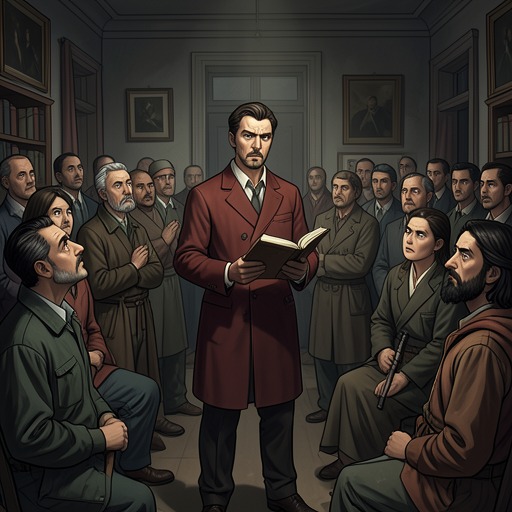
Jefferson Kyle Kidd reads from the Journal that the amendment was ratified on February 3, 1870, and that it allows qualified men to vote without regard to race, color, or previous condition of servitude. The passage states the rule in direct, practical terms: the right belongs to men who meet the qualifications to vote, and race or former enslavement is not to disqualify them.
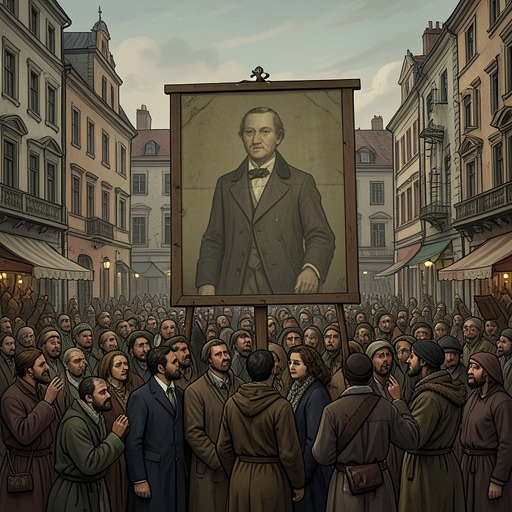
The reading is also a public encounter, not merely the delivery of legal news. Jefferson Kyle Kidd looks up from the paper, addresses the listeners’ reaction, and tells them to stop muttering. The scene places the amendment’s promise in a crowd where its implications provoke resistance, making the act of reading part of the political conflict around the text.
Formal Rights and Political Resistance
The amendment’s promise exists alongside other Reconstruction-era requirements and restrictions. When questioned during his journey, Jefferson Kyle Kidd is told that official business requires proof of a loyalty oath if he voluntarily aided the Confederate Army. He denies having done so. The exchange concerns his papers, not the amendment’s voting rule, but it shows how federal requirements shape encounters between travelers and military authority.
Elsewhere, a local group declares that people who voted for Davis will not be admitted into Erath County. The black-bearded speaker then explains that the county has no local administration: its sheriff and other public officials have been removed, and no replacements have been sent. The men have taken on governing authority themselves. This exclusion is not presented as an implementation of the Fifteenth Amendment; rather, it reveals the unstable local political order in which the amendment’s national guarantee must be understood.
Scope and Significance
The novel names a specific protection: voting rights for qualified men without racial discrimination or disqualification based on previous enslavement. It does not claim that the amendment resolves the broader disputes over who governs, which political decisions local groups will enforce, or how federal authority operates on the frontier. A separate reference to a law against carrying handguns further signals that daily life is shaped by rules and enforcement whose reach is contested.
Set against these scenes, the amendment stands as a clear formal promise amid uncertain political practice. Its reading makes that promise audible, while the hostile audience and the competing claims to authority show how far the existence of a rule may be from its secure realization.